Drive Carbon Neutral¹ with Shell Commercial Fuels
Offsetting with Shell Commercial Fuels can play a key role in your low carbon planning, allowing you to offset unavoidable carbon emissions from your vehicle fleet in a simple and cost-effective way.
How does it work?
You opt-in to compensate the CO₂e emissions for your plant or fleet with every purchase of fuels from Shell
Shell tracks your plant or fleet’s overall fuel consumption and calculates the associated CO₂e emissions
Shell offsets these emissions against our global portfolio of nature-based projects. Shell purchases carbon credits equivalent to the amount of your plant or fleet’s emissions
Shell issues an annual Shell carbon reduction certificate confirming that the fuel has been compensated.
Shell automatically calculates your well-to-wheel carbon emissions and offsets these through Shell’s global portfolio of nature-based solutions projects.

Watch: Decarbonise with Co₂ offset programme
Read the transcript
Read the transcript
Title: Decarbonise with CO2 Offset Programme
Duration: 2:50
Description: Shell offers CO2 Offset Programme as one of our solutions for decarbonisation. This is a nature-based solution (NBS) which CO2 emissions are captured and stored by natural ecosystems. Through this programme, Shell Commercial Fuels continues to serve our business customers with diesel products, which are now available as carbon neutral.
[Text displays]
Shell Helps You Decarbonise
[In vision]
A cluster of buildings on the shore of a harbor
{Voice over}
As an established source of energy, diesel plays a major role across a range of sectors.
[Audio]
Sound of running construction equipment
[In vision]
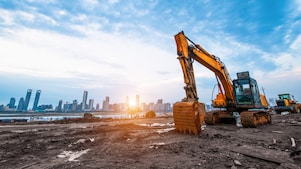
Different construction equipment operating in a site
{Voice over}
Diesel-powered construction equipment such as piling machines, cranes, excavators work round-the-clock to meet tight schedules.
[Background Music]
Sound of Shell (Light and relaxing)
[In vision]
Trucks and private vehicles travelling across a bridge
{Voice over}
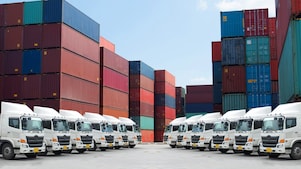
Diesel-powered freight trucks operate long hours to provide logistics service.
[Audio]
Sound of waves
[In vision]
A fisherman collecting fish catch
{Voice over}
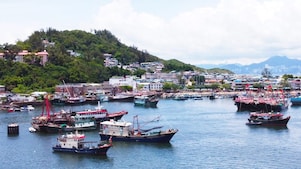
The world of marine industry is just as busy. Fishing boats continue to provide us with fresh seafood
[In vision]
A cargo ship travelling in sea, and mountains besides the coast transforming into buildings
{Voice over}
and container cargo ships are sailing across the world to transport our daily goods.
[In vision]
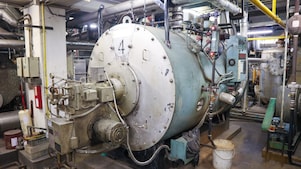
Boilers operating in a hospital
{Voice over}
Similarly, for hotels and hospitals, diesel often powers boilers to produce steam for sterilising and cleaning.
[In vision]
A tablet displaying different diesel-powered equipment or vehicles
{Voice over}
Currently, alternatives such as renewable energy may not be commercially feasible to completely replace diesel
[In vision]
Shell expertise analysing emission rate
{Voice over}
and the emissions generated are hard to abate.
[In vision]
A business customer and Shell expertise clinching an agreement with a handshake
{Voice over}
As an integrated energy provider, Shell would like to collaborate with our business customers to support their decarbonisation efforts.
[Text displays]
CO2 Offset Programme
Shell offers solution to avoid, reduce, and then compensate your emissions to help you reduce your carbon footprint.
{Voice over}
We offer CO2 Offset Programme as one of the solutions1 .
[In vision]
Shell Commercial Fuels supplying fuels for different sectors
[Text displays]
The CO2e lifecycle emissions of this product have been offset with verified Nature-Based Carbon Credits.
[In vision]
Shell expertise showing the blueprint of net-zero emission to customer
{Voice over}
Carbon neutral doesn’t mean that the diesel we provide doesn’t produce emissions, but rather we calculate the associated emissions and offset them with independently verified nature-based carbon credits.
[In vision]
Different trees being planted on grassland
{Voice over}
This programme is a globally recognised mechanism, which supports nature-based projects around the world which help nature store and capture more carbon emissions.
[In vision]
Shell’s relevant projects being showcased on a world map
{Voice over}
You also contribute to various global projects including afforestation and natural system restoration activities.
[In vision]
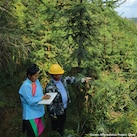
Tree species being planted in the Qinghai Afforestation Project
[Text displays]
Picea crassifolia (pine family), Populus, Juniperus przewalskii (a species of juniper)
{Voice over}
An example of one of these projects is the Qinghai Afforestation project, where 13,862 hectares of forest will be grown to combat desertification and improve biodiversity.
[In vision]
Local people helping to plant trees
{Voice over}
Additionally, the project contributes to local sustainable development by providing jobs and training to the local community.
[In vision]
A business customer holding a certificate in front of a vehicle powered by carbon neutral diesel
[Text displays]
Powered by Shell Carbon Neutral Diesel
{Voice over}
Shell calculates the associated CO2 emissions on a monthly basis, you will receive a certificate from us each year, as proof of using carbon neutral diesel2.
[In vision]
Shell expertise presenting the result of decarbonisation to customer
[Text displays]
The CO2e lifecycle emissions of this product have been offset with verified Nature-Based Carbon Credits.
{Voice over}
Shell looks forward to providing you with carbon neutral diesel2
[In vision]
City scene in dusk
{Voice over}
and working together to protect and restore nature.
Benefits to your Business
There are several advantages to offsetting the CO2e emissions with Shell:
- Annually, you will receive a carbon reduction certificate
- Your company will demonstrate corporate leadership and strengthen its position
- You can begin, or continue, sustainable business practices
- You can meet the increasing demands of internal and external stakeholders
- Your business can have a positive impact on communities around the world by offsetting through verified projects
Carbon Offsetting faqs
What are Nature-Based Solutions?
‘Nature-based solutions’ – also referred to as natural climate solutions – comprise all activities related to the protection or re-development of natural ecosystems such as forests, grasslands, and wetland systems to lower concentrations of greenhouse gases in the atmosphere. This can include avoiding or minimising greenhouse gas emissions, and helping to sequester carbon into so-called ‘carbon sinks’. Each of these activities results in the biological capture and storage of carbon – typically through the process of photosynthesis. Such activities can lead to the marketing, trading and sale of carbon offset credits. They also help, for instance, to reduce soil erosion, protect animal habitats, and create products such as timber and biofuels.
What are carbon credits?
A carbon credit represents the avoidance or removal of 1 tonne of carbon dioxide. These credits are traded among governments and businesses. In order to ensure the quality and integrity of carbon credits, there is a robust programme of third-party standards, verification processes and registries.
What is offset?
What is offset?
Shell’s compensation service is for the so-called "well-to-wheel" emissions, i.e. CO2e emissions from the extraction of crude oil to the combustion of the fuel in the engines of your fleet or plant. The use of the fuel is responsible for approximately 80% of the "well-to-wheel" CO2e emissions of the fuel (European Commission, JRC). The extraction of crude oil, its refining and its distribution are responsible for the remaining 20% of the emissions.
Why should I buy carbon credits from Shell?
Shell selects carbon credits that have been approved by standards such as the Verified Carbon Standard, the Gold Standard and the Climate Action Reserve. These are examples of well-known standards in the market. Shell has a deep knowledge of energy markets and is one of the leading Environmental Products Trading desks globally. Moreover, Shell’s scale means it can offer customers a large number of options to meet their needs with reduced credit risk when compared to purchasing directly from a project
Read more about nature-based solutions on our global website
1 CO₂ compensation does not imply that there is no environmental impact from the production and use of the product as associated emissions remain in the atmosphere. CO₂ compensation is not a substitute for switching to lower emission energy solutions or reducing the use of fossil fuels. Shell businesses focus first on emissions that can be avoided or reduced and only then, compensate the remaining emissions. “Carbon neutral”, “carbon offset” or “carbon compensation” indicates that Shell will engage in a transaction where an amount of CO₂ equivalent to the value of the remaining CO₂e emissions associated with the raw material extraction, transport, production, distribution and usage of the fuel are compensated through the purchase and retirement of carbon credits generated from CO₂ compensation projects. Although these carbon credits have been generated in accordance with international carbon standards, the compensation may not be exact. CO₂e (CO₂ equivalent) refers to CO₂, CH₄, N₂O.